

Table of Contents
-
Introduction
-
What Happened: Why Do Red Spots Appear?
-
Key Highlights
-
Background Information
-
7 Common Causes of Red Spots on the Top of Mouth
-
Canker Sores
-
Oral Thrush
-
Trauma or Burns
-
Viral Infections
-
Allergic Reactions
-
Petechiae
-
Smoking or Irritation
-
-
When to See a Doctor
-
Expert Insight
-
Prevention Tips
-
Conclusion
-
FAQs
-
Internal Linking Section
Introduction
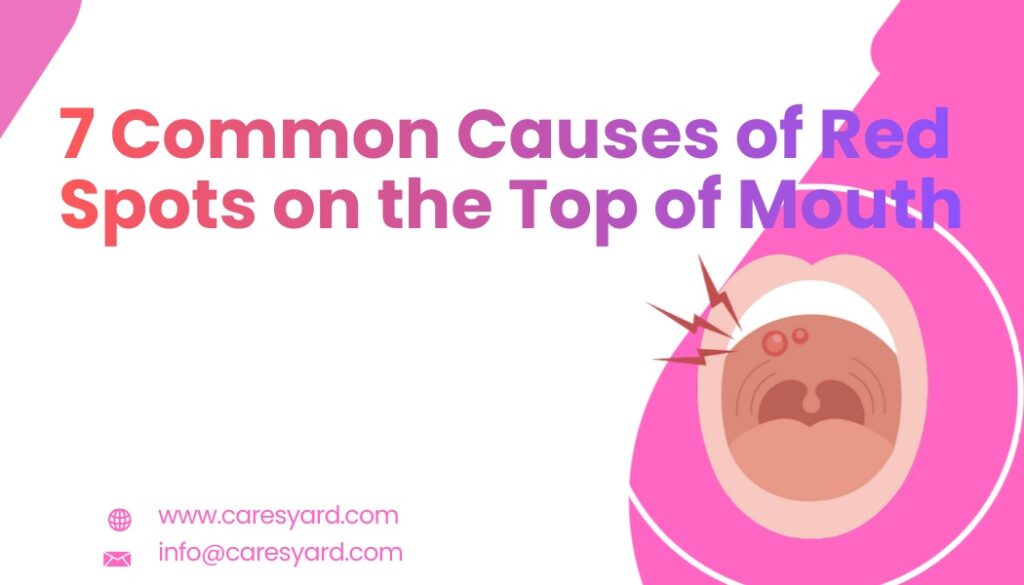
Noticing red spots on the top of mouth can feel alarming. Many people describe them as red dots on roof of mouth, small red spots on palate, or even a painful red sore on roof of mouth. In some cases, they appear as flat red patches on upper mouth, while others may see a single red bump on the roof of the mouth.
These changes can develop suddenly and may or may not cause pain. While most cases are harmless and temporary, some may signal infection, irritation, or an underlying health issue. Understanding the cause is essential for proper treatment. In this article, we explore seven common reasons behind these red marks on top of mouth and explain when you should seek professional advice.
What Happened: Why Do Red Spots Appear?
The roof of your mouth, also called the palate, contains delicate tissue filled with small blood vessels. When these tissues become irritated, inflamed, or infected, they can form red spots on the top of mouth.
Sometimes the issue develops after eating hot food. Other times, it may result from infection, stress, allergies, or poor oral hygiene. Identifying what triggered the change helps determine the right treatment approach.
Key Highlights
-
Most red dots on roof of mouth are temporary and harmless.
-
Burns from hot food are a common cause.
-
Viral and fungal infections may cause painful red patches on upper mouth.
-
Persistent or spreading spots need medical evaluation.
-
Good oral hygiene reduces risk.
Background Information
The palate consists of two parts:
-
Hard palate (front section)
-
Soft palate (back section)
Both areas contain soft tissue that reacts quickly to irritation. Because the mouth stays warm and moist, bacteria and fungi can grow easily if hygiene declines. This environment makes it common for small red spots on palate to appear occasionally.
However, frequent or severe symptoms should not be ignored. Long-lasting red marks on top of mouth may indicate infection or systemic conditions.
7 Common Causes of Red Spots on the Top of Mouth
1. Canker Sores (Aphthous Ulcers)
Canker sores are one of the most frequent causes of a red sore on roof of mouth. They often begin as red, tender areas before forming a white or yellow center.
Symptoms:
-
Pain while eating
-
Burning sensation
-
Small round ulcer
Stress, vitamin deficiency, or minor injury can trigger them. They usually heal within 1–2 weeks.
2. Oral Thrush
Oral thrush is a fungal infection caused by Candida yeast. It may cause creamy white patches surrounded by redness. Sometimes it starts as subtle red patches on upper mouth.
Risk Factors:
-
Antibiotic use
-
Diabetes
-
Weak immune system
Treatment typically includes antifungal medication prescribed by a doctor.
3. Trauma or Burns
Hot pizza, tea, or spicy food can burn the roof of your mouth. This often leads to small red spots on palate or tender red areas.
These injuries usually heal within a few days. Avoid hot food and rinse with salt water to support healing.
4. Viral Infections
Certain viral infections, such as hand, foot, and mouth disease or cold sores, may cause red spots on the top of mouth.
Symptoms may include:
-
Fever
-
Fatigue
-
Blisters
-
Sore throat
Viral infections usually resolve on their own, but supportive care helps reduce discomfort.
5. Allergic Reactions
Food allergies or reactions to toothpaste, mouthwash, or medication can trigger a red bump on the roof of the mouth or scattered red dots on roof of mouth.
Common triggers:
-
Nuts
-
Citrus fruits
-
Spicy foods
-
New dental products
Identifying and avoiding the trigger prevents recurrence.
6. Petechiae
Petechiae are tiny red or purple spots caused by small broken blood vessels. They often appear as red marks on top of mouth and do not blanch when pressed.
Possible causes:
-
Excessive coughing
-
Vomiting
-
Strep throat
-
Blood disorders (rare)
If petechiae appear with fever or weakness, consult a doctor immediately.
7. Smoking or Chronic Irritation
Smoking and frequent irritation can inflame oral tissues. Long-term exposure may cause persistent red patches on upper mouth or thickened tissue.
Quitting smoking significantly reduces oral health risks and improves tissue healing.
When to See a Doctor
Seek professional help if:
-
The red spots last more than two weeks
-
Pain worsens
-
You develop fever
-
Spots spread or bleed
-
Swallowing becomes difficult
Persistent red spots on the top of mouth require medical evaluation to rule out serious conditions.
Expert Insight
Dental professionals explain that most oral red spots result from irritation or minor infections. According to oral health experts, maintaining consistent hygiene and monitoring unusual changes helps prevent complications. Early evaluation improves outcomes and ensures proper diagnosis.
Prevention Tips
-
Brush twice daily
-
Floss regularly
-
Avoid very hot food
-
Stay hydrated
-
Limit tobacco use
-
Replace toothbrush every 3 months
These simple habits reduce the risk of developing small red spots on palate or other oral issues.
Conclusion
Seeing red spots on the top of mouth can feel concerning, but most cases are mild and temporary. Whether they appear as red dots on roof of mouth, a red sore on roof of mouth, or scattered red patches on upper mouth, understanding the cause helps you take the right steps.
Pay attention to symptoms, maintain good oral hygiene, and seek professional advice if the condition persists. Your oral health reflects your overall well-being.
If you found this guide helpful, explore more oral health tips on our website and stay informed.
FAQs
1. Are red spots on the top of mouth dangerous?
Most are harmless and result from burns or minor irritation. However, persistent spots require medical evaluation.
2. How long do red spots on the roof of mouth last?
Minor injuries usually heal within a few days. Canker sores may last up to two weeks.
3. Can dehydration cause red spots?
Yes, dry mouth increases irritation and infection risk, which may lead to red marks on top of mouth.
4. Should I worry about a red bump on the roof of the mouth?
If it is painful, growing, or lasts more than two weeks, consult a dentist.